
Why we exist
There is much discussion about what AI could mean for science. Yet there is remarkably little insight into what is actually happening at researchers’ desks.
Of every 1,000 papers from 2025
AI is widely used, but almost nobody discloses it.
- 150 to 200 contain traces of AI
- 1 discloses that AI was used
Source: Rathenau Instituut, Regie over AI in de wetenschap (2026), based on He & Bu (2026).
Meanwhile, research institutions face the task of formulating policies for responsible AI use. Researchers are currently making daily decisions about data, sources, and what they do and do not delegate, without a clear framework.
Institutions, funders and government set rules for individual tools, often reactively and for the short term.
Researchers make daily decisions about data, sources and what they delegate, largely on their own.
We started this initiative with the mission of engaging carefully and responsibly with both the opportunities and the risks of this technology, so that it benefits science and society.
Our approach
The knowledge is already there, but it is scattered
Almost every research team has one researcher who already works with AI deliberately and skilfully. Colleagues drop by with their questions. These AI-literate researchers work largely in isolation from one another, at institutes across the country. Each of them reinvents the wheel, and their knowledge stays with them and with the colleagues who occasionally ask them something.
Now
Scattered
Our approach
Connected
The Observatory is the independent link between research practice and policy. We bring these researchers together, follow what happens in practice and feed it back.
What we do
Our work consists of two activities. What we learn from both, we feed back to policymakers and other parties who can put it to use.
Activity 1
A structure for knowledge sharing
We facilitate a structure in which AI-literate researchers from the same field learn from one another nationally, develop a framework for their discipline together and pass that knowledge on to their own team. This way, knowledge from within the discipline reaches a large group of researchers. Along the way, we measure and learn how all these researchers use AI and how they view the subject.
The structure
One network per field
- The Observatory facilitates, connects and measures
- AI-literate researchers from the same field, one per institution
- Their immediate colleagues, who learn from the AI-literate researcher in their team
- FindIn each team, the researcher who already works with AI deliberately and skilfully.
- ConnectBring AI-literate researchers from the same field together nationally.
- FrameworkJointly develop a framework for knowledge and guidelines in their field.
- Pass onAI-literate researchers train their own team, supported by the Observatory.
- ImproveTest, adjust and extend to other fields.
We start with a pilot in one field. Other fields will follow, building on what that pilot teaches us.
Activity 2
An independent panel
In addition, we keep our finger on the pulse with a standing panel of 50 to 100 researchers from different fields. At set moments, we ask them about their working practice: what role does AI play in the researcher’s daily work, and how do they view it? Because we speak with the same people again and again, we also see how this develops over time. The panel is separate from our other programmes, so it gives an independent picture of the current state of affairs.
Feedback
From practice to policy
We bring together the lessons from both activities. This shows what role AI plays in research, how that is developing and where policy and practice diverge.
Activity 1
Structure for knowledge sharingHow AI-literate researchers and their teams use AI and what changes.Activity 2
Independent panelThe current state of affairs: what role AI plays in researchers’ daily work.The Observatory as an independent institute
Researchers often use AI in a grey area where no policies are yet in place. What really happens there only becomes visible if it is safe to talk about it. That is why we believe this work belongs with an independent institute. The Observatory has no stake in more or less AI use and is separate from the institutions and funders that researchers depend on.
What researchers tell us is not shared with their supervisor, their institution or their funder. Conversations are processed in anonymised form and published only in aggregate. We submit quotations to the researcher for approval in advance. We only process data that could identify a researcher with their explicit consent.
What we are working on now
Last updated: November 2026
- A first pilotWe are preparing a pilot of the knowledge-sharing structure, in which AI-literate researchers from one field find each other and pass their knowledge on to their teams.
- Conversations with researchersWe speak with researchers from different disciplines, institutions and career stages about their working practices. These conversations explore what their research actually looks like, including where technology and AI help, hinder, or are deliberately kept out. They form the start of our panel.
- Advice from scienceWe are talking with experienced scientists and administrators to get advice on our approach, and are putting together a scientific advisory board.
- A co-founderWe are looking for a co-founder who wants to help build the Observatory. View the vacancy
Are you a researcher who would like to take part, or do you know someone we should speak to? We would be glad to hear from you. You will find our email addresses at the bottom of this page.
Who we are
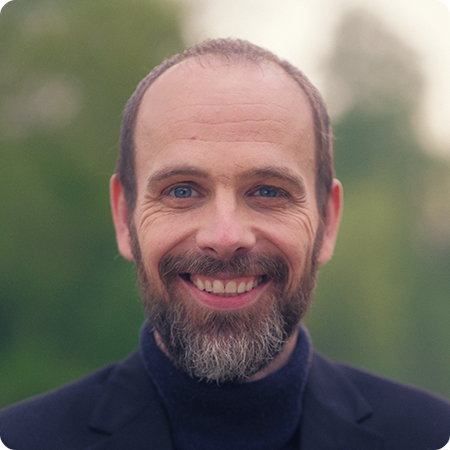
Elian Wils
As an AI ethicist and practitioner, advised a major Dutch research institute on matters ranging from secure data environments to applications in the research process. Founder of Aisee; studied philosophy at the University of Amsterdam (UvA) and completed the AI Ethics programme at the University of Oxford.

Kees Brinkmans
Responsible for the interview research and collaboration with institutions. Fellow at Youth for Responsible AI & AI Mentor at the AI for Impact Collective.
Co-founder wanted
We are looking for an entrepreneurial co-founder and programme director to take this from an initiative to a national movement.
View the vacancy →The Observatory is an initiative in formation. We are working towards an independent foundation with a board and a scientific advisory board.
Scientific advisory board
We are putting together an advisory board of scientists and experienced administrators from the Dutch research community. The board helps us improve our methodology, gives strategic advice and opens doors within science. More about the advisory board →
Being formed
Get involved
We are at the beginning and are looking for people who want to help build this.
- As a researcherShare your experience in a confidential conversation, or bring your knowledge to your team as an AI-literate researcher.
- As an institutionStart a pilot at your institution.
- As a funderMake the first pilot possible.
- As a co-founderHelp build the Observatory. View the vacancy